


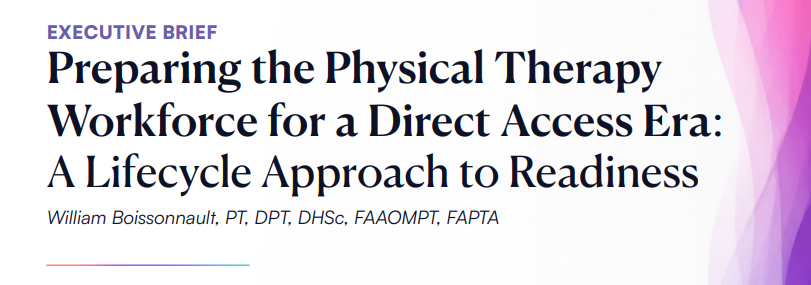
A new Executive Brief explores how physical therapy and physical therapy education can support greater clinical autonomy across the professional lifecycle.
Direct access is expanding the role of physical therapists in many parts of the world, but regulatory change alone does not create a workforce that is prepared for greater autonomy.
Universities also have an important role to play.
As expectations for physical therapists evolve, institutions may need to consider how entry-level education, postgraduate pathways, and continuing professional development prepare clinicians for greater responsibility in clinical decision-making, screening, referral, and patient management.
William Boissonnault, PT, DPT, DHSc, FAAOMPT, FAPTA, explores this opportunity in a new Executive Brief from Strelis™, Preparing the Physical Therapy Workforce for a Direct Access Era: A Lifecycle Approach to Readiness.
About the author
William Boissonnault, PT, DPT, DHSc, FAAOMPT, FAPTA, authored the Executive Brief for Strelis.
A nationally recognized physical therapist, educator, and leader in direct access and professional development, Bill brings decades of experience across clinical practice, physical therapy education, primary care, medical screening, and professional leadership.
Frequently Asked Questions
What is direct access in Physical Therapy?
Direct access allows patients to seek evaluation or treatment from a Physical Therapist without first obtaining a referral from another healthcare provider. Requirements vary by country, state, province, and jurisdiction.
Why does direct access matter to Physical Therapy educators?
Greater autonomy may require clinicians to assume additional responsibility for screening, clinical decision-making, referral, care coordination, and patient management. Universities can help prepare both future graduates and practicing Physical Therapists for these evolving expectations.
Is the Executive Brief relevant to international educators?
Yes. The Executive Brief is intended for Physical Therapy educators and university leaders in the United States and internationally. It recognizes that direct access regulations, healthcare systems, and educational needs vary across countries and jurisdictions.
Who should read the Executive Brief?
The brief is intended for university leaders, deans, department chairs, program directors, faculty members, postgraduate education leaders, professional associations, and others involved in preparing and supporting the Physical Therapy workforce.
